
'The Final Problem' ending explained: Why did Basil let the killer go?

Netflix’s 'The Final Problem' follows an actor whose experience playing Sherlock Holmes becomes useful when a hotel guest is found dead. Released September 25, the four-episode adaptation of Arturo Pérez-Reverte’s novel stars José Coronado as Benjamin Basil. A storm strands him on an island, where an apparent suicide leads to an investigation into three murders. By the finale, Basil has identified the person responsible, but solving the case does not lead him to immediately hand the killer over to the authorities.
Spoilers for 'The Final Problem' follow.Warning: Graphic content. Readers’ discretion advised
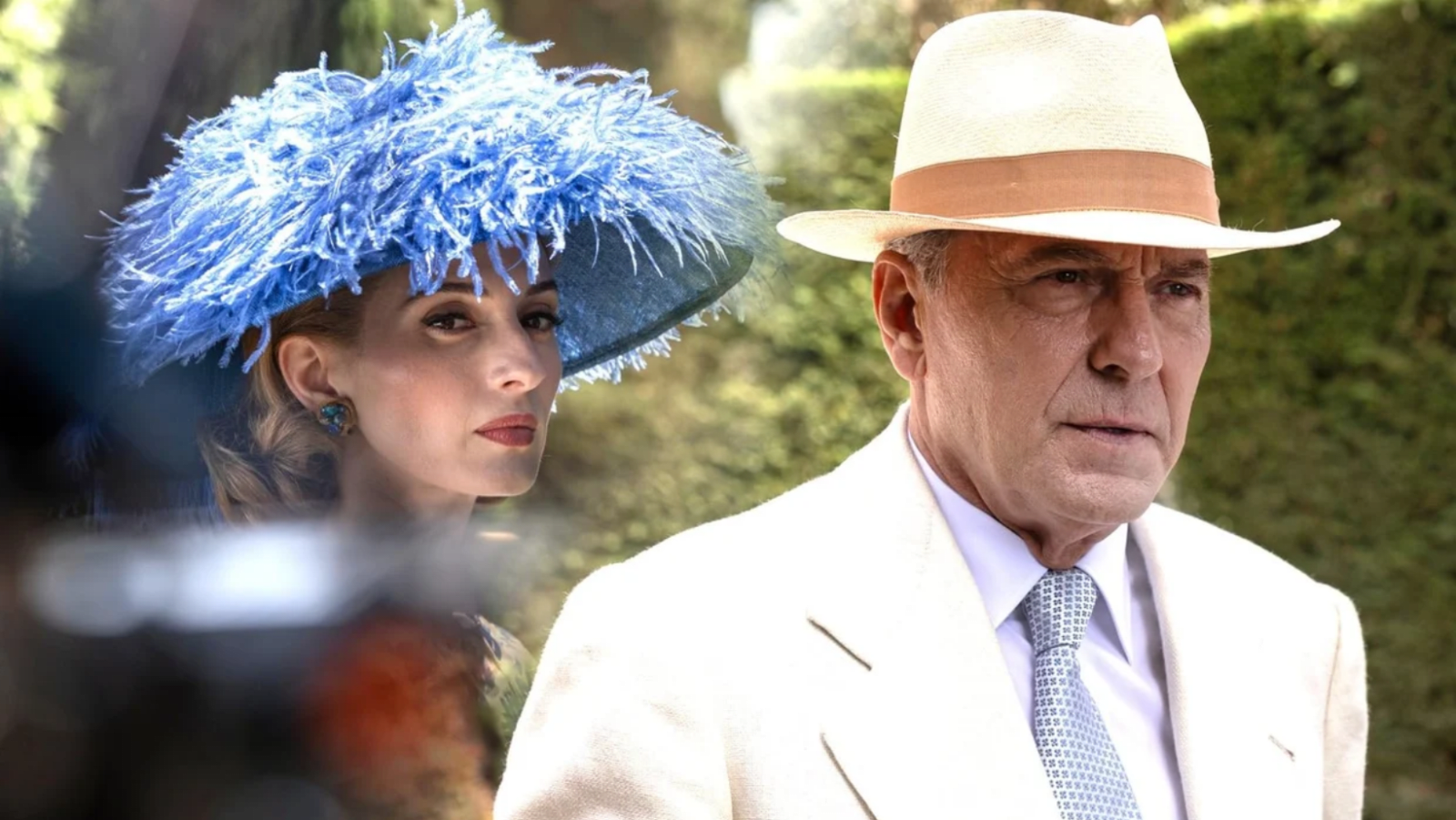
Basil lets the mu*derer leave because she reveals a connection to his past that he has failed to recognize. The woman Basil believes is Adela Figueroa is actually Elisa Mander, someone with whom he once had a relationship. Basil ghosted Elisa, and their final conversation prompts him to express regret for taking her for granted. He decides not to report her immediately, making his response to the mu*ders inseparable from how he previously treated her.
The revelation comes after Elisa has tried to kill Basil to protect her secret. She leaves him asleep in a closed garage with a car running, then returns to retrieve an identity card that could expose her. When she discovers that he survived, their confrontation moves beyond the evidence he has gathered. Elisa tells him that they have dated before, forcing Basil to confront a history he had forgotten while investigating her crimes.

To understand how they reach that point, the distinction between Elisa and Adela matters. The woman whose body is discovered is actually Adela, although Elisa stages the scene to make it appear that she died by su*cide. Meanwhile, the surviving woman played by María Valverde has been presenting herself as Adela throughout the investigation. The murderer and the first victim have therefore been identified by each other’s names, allowing Elisa to hide behind the assumption that she is already dead.
The identity swap began as an arrangement between the two women. Adela was a wealthy socialite, and Elisa worked for her. By exchanging identities, Adela could spend time away from public scrutiny, while Elisa could experience her employer’s lifestyle. They switched roles before reaching the island, so the other guests encountered them under names that concealed who they really were.
After killing Adela, Elisa stages the scene to make it appear that she died by su*cide. The deception allows Elisa to continue living as Adela without anyone realizing that she has stolen her employer’s identity. It also means Basil’s investigation starts with an incorrect identification of the victim. Discovering that a mu*der occurred is only part of his task because he must also establish whose death he is investigating.
Basil initially doubts the su*cide explanation when he examines the circumstances surrounding the body. He notices an injury at the victim’s temple that he does not believe resulted from a fall. The rope’s disappearance raises further questions as he reviews photographs and returns to the scene with novelist Francisco Foxá. These details keep him investigating even while other guests accept that the woman took her own life.
Dr. Seruya eventually recognizes that the death was a mu*der, but he treats the discovery as an opportunity to demand money. Instead of sharing his findings, he attempts to blackmail the killer. Elisa mu*ders him, eliminating someone who could expose what happened to Adela. A letter opener associated with his death is planted in Basil’s room, adding another misleading piece of evidence to the investigation.
Seruya’s dealings with other guests also complicate the search for his killer. Basil and Foxá discover money the doctor concealed, while Vicky reveals that Seruya had been blackmailing her over an abortion she feared would damage her acting career. Fonseca paid him to keep the information private. That separate arrangement supplies another possible motive for Seruya’s death, but it does not explain Elisa’s identity deception or establish Fonseca as the mu*derer.

Mr. Klemmer’s mu*der has a different motive. Elisa holds him responsible for ordering the execution of her husband, a pilot, during World War II. She kills him in revenge, and Basil identifies a clockweight as the weapon used in the attack. Foxá briefly attracts suspicion because his missing novel features the same mu*der weapon, but the similarity proves coincidental rather than evidence of his involvement.
The clues eventually bring Basil back to the women’s identities. The clues eventually bring Basil back to the women’s identities. He finds the missing orange shawl abandoned on the beach and re-examines physical evidence through a film set recreating the incident. Elisa’s identity card provides the decisive connection when Basil sees that she previously had brunette hair. He realizes that the surviving woman is Elisa, allowing him to connect the false identification of the first victim with the subsequent killings.
Elisa leaves without being turned over to the authorities, but that does not establish that she escapes permanently. Basil warns her that he can still reveal the truth. He knows her identity and has uncovered her responsibility for all three murders. His choice gives her freedom for the time being, while the possibility that he could expose her remains unresolved.