What does ‘being gelded’ mean in ‘House of the Dragon’? Ormund’s brutal punishment explained

This story contains spoilers for 'House of the Dragon' Season 3, episode 4.
In ‘House of the Dragon’ Season 3, episode 4, Ormund Hightower (James Norton) orders Garrick of Whitegrove (Douglas Russell) to be gelded after the soldier attempts to se*ually assault Kat (Ellora Torchia), the wife of Hugh Hammer (Kieran Bew). Garrick is also sentenced to have his arm broken because he injured another woman during the confrontation. The severity of the punishment explains why Garrick immediately pleads that he has a wife, but the moment also reveals how Ormund uses justice as a tool to influence Daeron Targaryen.

To geld a male means to castrate him, typically by removing his testicles. While the term is most commonly used in reference to animals such as horses and donkeys, it can also apply to humans. In Garrick’s case, the punishment directly reflects the nature of his crime and is intended to prevent him from fathering children. His mention of his wife is therefore an appeal rooted in what the sentence would mean for his future and family life. The act itself is not shown on screen, and the episode moves on after Garrick is taken away. Castration has appeared before in George RR Martin’s world, including through characters like Varys and the Unsullied in ‘Game of Thrones.’
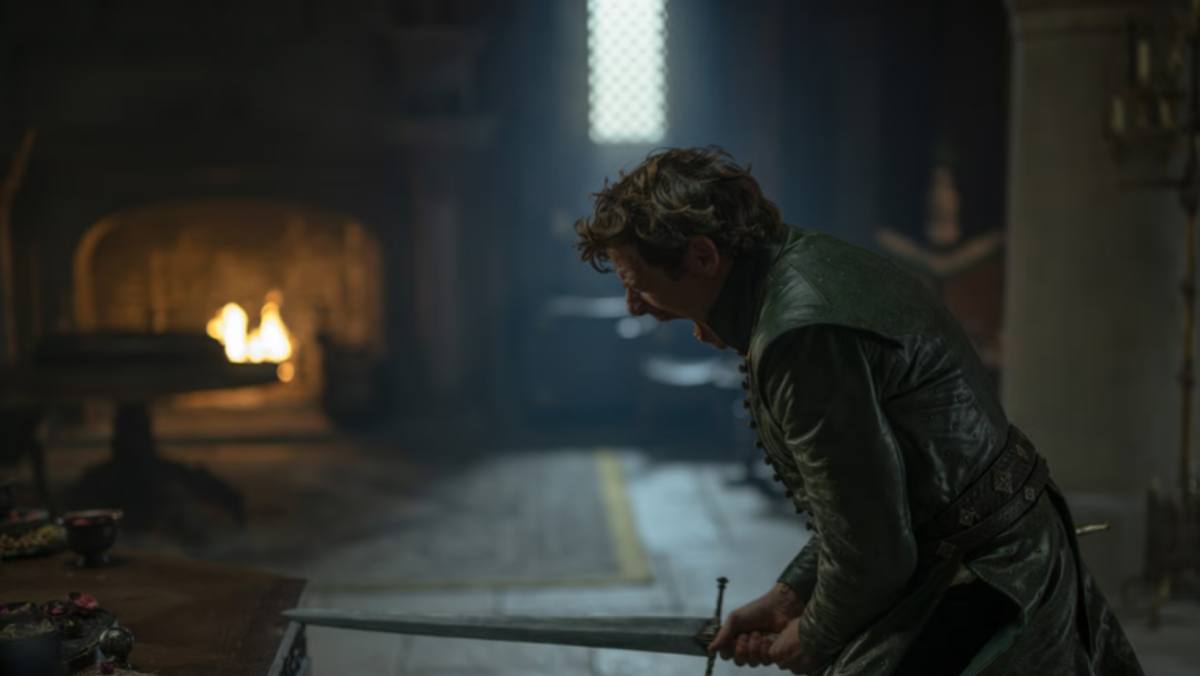
Garrick’s punishment comes after the Green army occupies Tumbleton, placing soldiers inside the homes of residents. He enters the house where Kat is staying with her brother Leo (Abhin Galeya) and Leo’s wife. When Garrick attempts to force himself on Kat, the family intervenes, and Leo attacks him. During the struggle, Garrick breaks Leo’s wife’s arm. The situation is brought before Ormund, who declares that Garrick has violated Guest Right before delivering his ruling. He orders Garrick to be gelded and have his arm broken, warning that any further offense will result in execution.
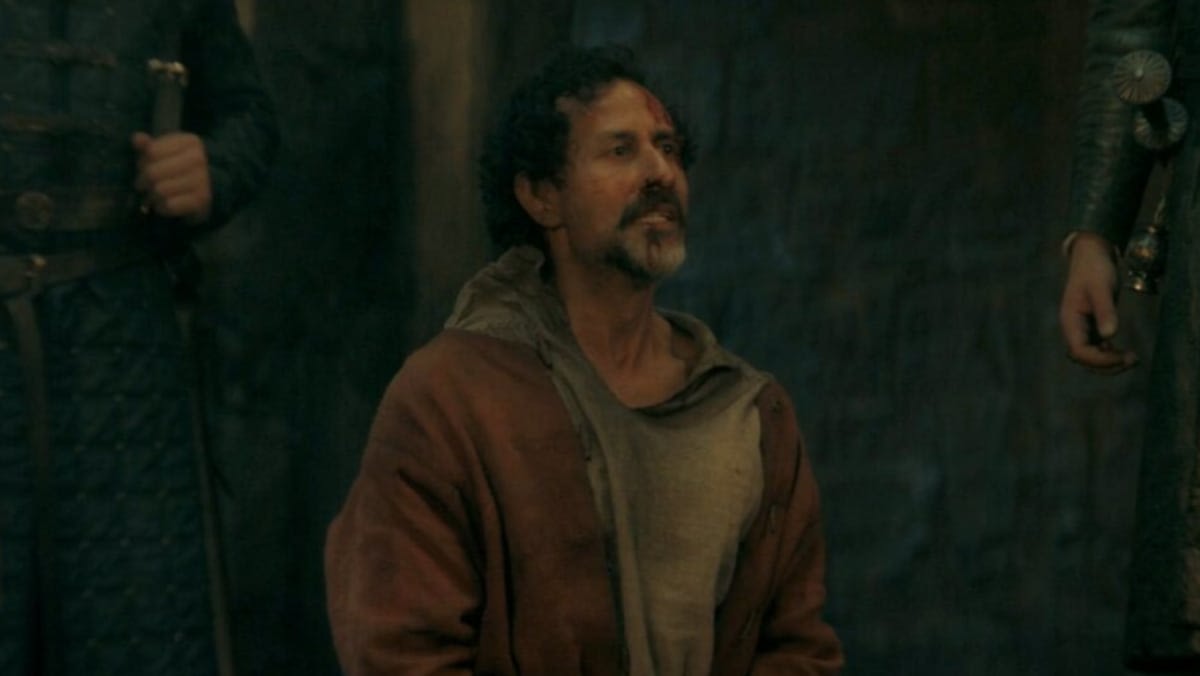
The public nature of the punishment allows Ormund to demonstrate that Hightower soldiers are not free to abuse the people whose homes they occupy. Breaking Garrick’s arm mirrors the injury inflicted on Leo’s wife, while gelding him addresses the attempted assault. Ormund then tells Daeron Targaryen (Benjamin Evan Ainsworth) that they must maintain a “firm grip” because disorder threatens their control. This turns the ruling into a lesson for Daeron, who was raised in Oldtown under Ormund’s guidance. Ormund presents punishment as a means of maintaining authority and preventing disorder. At the same time, the ruling helps present the occupation as structured and controlled rather than chaotic.
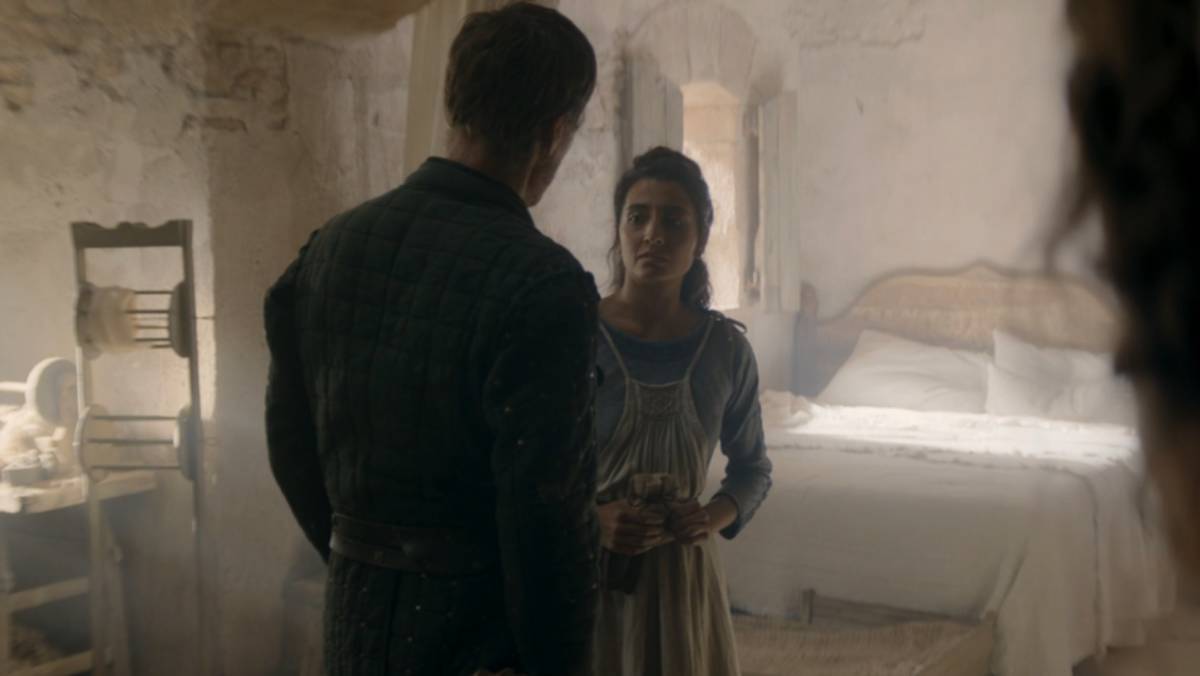
The limits of Ormund’s justice become clear when Leo is later brought back in chains. Daeron believes Leo should be spared because he acted to protect his family, but Ormund argues that Leo “laid hands on a Hightower.” He frames Garrick as an extension of the Hightower army, Daeron, and the crown, meaning Leo must be punished for attacking him. When Daeron asks whether mercy is a kingly virtue, Ormund dismisses the idea and hands him a sword. Daeron then executes Leo despite knowing he acted in defense of his loved ones. This contrast shows that Garrick’s punishment is not about protecting the people of Tumbleton but about preserving military order, while Leo’s death reinforces the consequences of resisting Hightower authority.
By the end of the episode, Ormund makes his intentions clear by telling Daeron that he must become king because his brothers are no longer in a position to lead the Green cause. Although Daeron is a Targaryen prince and dragonrider, Ormund emphasizes that he was raised as a Hightower in Oldtown. He wants Daeron to become king as a Hightower rather than a Targaryen. With Tessarion at his command, Daeron represents both a royal claimant and a powerful military asset. Garrick’s gelding serves as part of Ormund’s effort to teach Daeron how to rule through control and discipline. By forcing him to execute Leo, Ormund also tests whether Daeron will follow his guidance over his own instincts. The episode ends with Ormund declaring, “And now we begin,” signaling that the events in Tumbleton mark the start of his broader plan. New episodes of ‘House of the Dragon’ Season 3 air Sundays at 9 p.m. ET on HBO and stream on HBO Max in the United States.