Were the Trojan War and Trojan horse real? True story behind 'The Odyssey's biggest moments
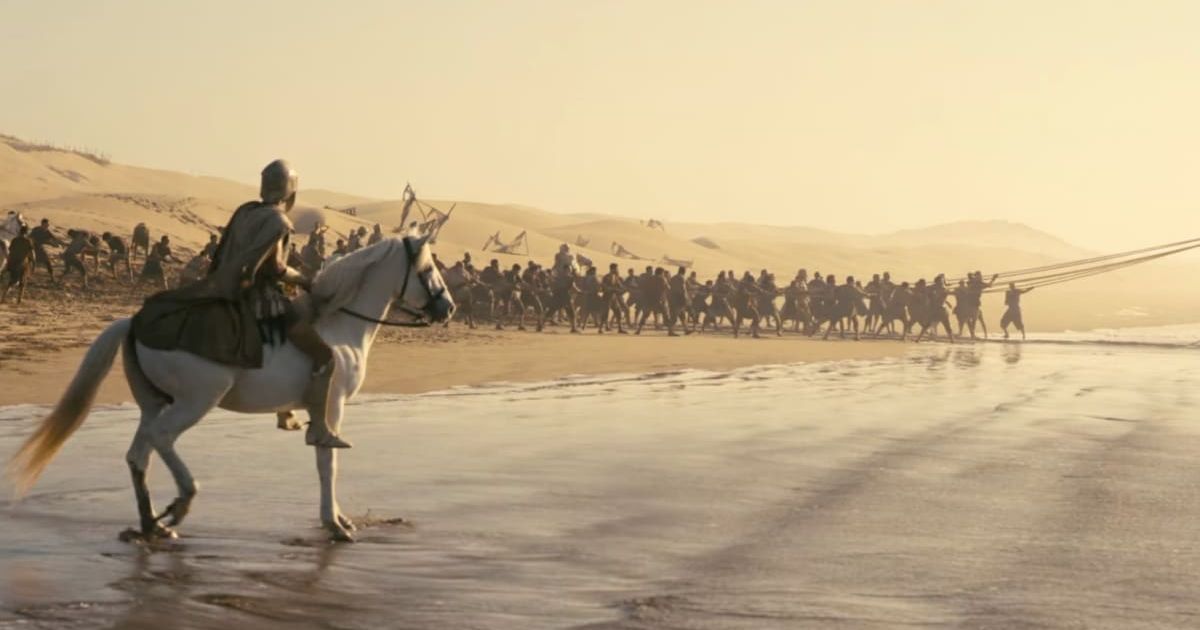
Christopher Nolan's ‘The Odyssey’ hit theaters on July 17, bringing Homer's legendary tale to the big screen. As audiences revisit Odysseus' journey after the fall of Troy, many are asking whether the Trojan War really happened and if the iconic Trojan Horse ever existed. The answer isn't as straightforward as mythology might suggest. For centuries, Homer's ‘The Iliad’ and ‘The Odyssey’ have shaped how people picture the conflict between the Greeks and the Trojans. But when historians compare those stories with archaeological discoveries, they find a mixture of fact, possibility, and fiction. Today, most experts agree on one thing: the city of Troy almost certainly existed. Whether the war happened exactly as Homer described it is another matter entirely. One of the biggest breakthroughs came through archaeology rather than literature, as per Comic Basics.
The ruins widely accepted as ancient Troy are located at Hisarlık, in modern-day northwestern Turkey. While people once debated whether Troy was simply an imaginary city, that discussion has largely been settled. Excavations there began in 1863 under Frank Calvert. A few years later, in 1871, German archaeologist Heinrich Schliemann launched the excavations that made international headlines. His discoveries convinced many skeptics that Troy had not been invented. Research at Hisarlık has continued for decades, and newer discoveries have painted a more detailed picture of life during the Late Bronze Age. Among the artifacts uncovered are Bronze Age sling stones and ancient weapons dating back roughly 3,200 to 3,600 years. Those dates line up closely with the period when many historians believe a conflict involving Troy could have taken place.
Researchers have also found evidence showing that part of the city suffered a destructive fire around 1190 to 1180 BCE. Interestingly, that timeline roughly matches the traditional date ancient Greek writers assigned to Troy's fall. Moreover, Hittite cuneiform tablets mention a city called Wilusa and a powerful group known as the Ahhiyawa. Many scholars believe Wilusa may refer to Troy, while Ahhiyawa could describe the Achaean Greeks featured in Homer's poems. Still, historians urge caution. Most specialists believe Homer's epics preserve the memory of an actual struggle involving Troy, but a few argue that the poems should be read as literal history. If the Trojan War took place, historians generally date it to the 13th or early 12th century BCE. Homer is believed to have composed ‘The Iliad’ about 400 years later. During that long gap, the story was passed down orally, with each generation adding dramatic events, legendary heroes, and mythical elements that made it more entertaining.

Archaeological discoveries often raise new questions rather than provide clear answers. Researchers found piles of sling bullets near the ruins, which some historians argue invading armies were more likely to leave behind than victorious defenders. Along with evidence of fire and human remains, the finds suggest violent conflict but cannot confirm who won or how it ended. Then comes perhaps the biggest mystery of them all: the Trojan Horse. One theory argues that the “horse” may never have been an animal-shaped object at all. Some experts suggest Homer transformed a siege engine or battering ram into a horse through storytelling. Ancient military machines were sometimes named after animals, and battering rams used to be covered with wet horse hides to protect them from flames during attacks. Another explanation points away from warfare entirely.
In Greek mythology, Poseidon ruled both horses and earthquakes. Because earthquakes can bring down city walls, some historians have suggested the horse symbolized a powerful earthquake that weakened Troy rather than a military trick carried out by Greek soldiers. Others see the horse as a symbolic image instead of a physical object. Ancient sources frequently described the Trojans as skilled horse breeders and “tamers of horses.” From that perspective, the horse could simply represent the defeat of Troy itself rather than an actual structure rolled through the city gates. So, was there really a giant wooden horse filled with hidden soldiers? Almost certainly not, according to modern scholarship. But was there a wealthy city called Troy? Almost certainly yes. Was there a conflict involving Greek forces and that city? Many historians think that's entirely possible.