Is 'The Uprising' about Robin Hood? Here's what we know about Andrew Garfield's historical drama
Andrew Garfield’s ‘The Uprising’ tells the story of England’s 1381 Peasants’ Revolt, but the film has another identity that its marketing revealed only weeks before release. Focus Features announced that the historical drama would carry the tagline ‘The Uprising: The Rise of Robin Hood.’
The surprise reveal caused confusion, since earlier promotions had presented the film as a story about the Great Uprising and never mentioned Robin Hood. The film is directed by Paul Greengrass, known for ‘The Bourne Supremacy,’ ‘The Bourne Ultimatum,’ and ‘Captain Phillips.’
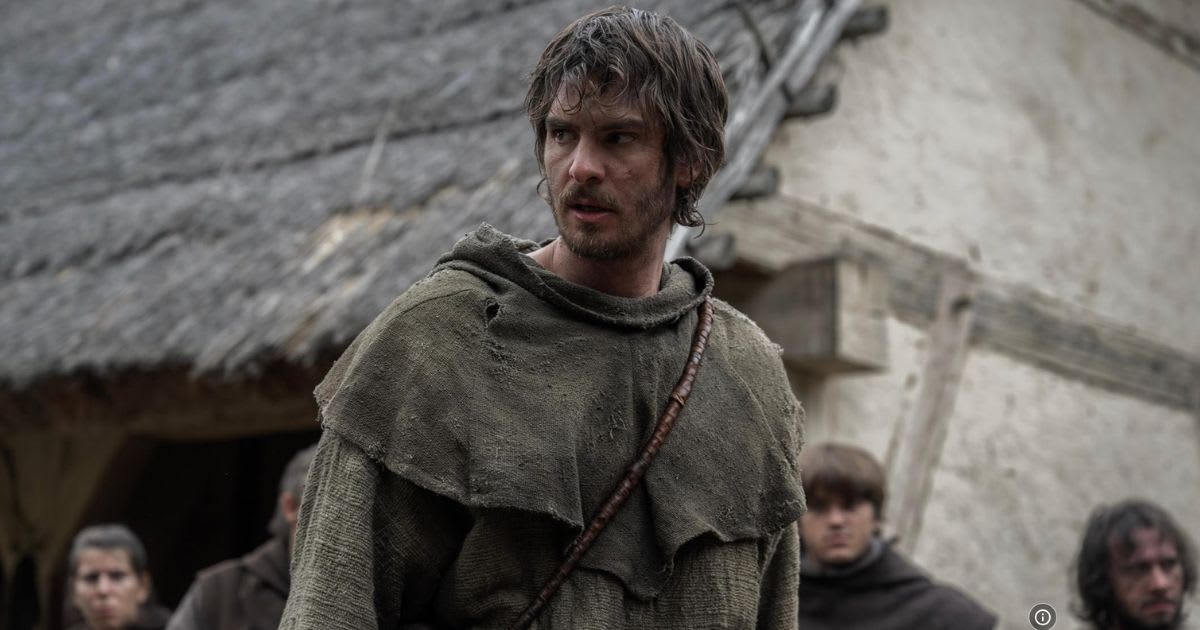
Andrew Garfield plays an unnamed farmer, Ploughman, who joins the rebellion after his village suffers under an oppressive poll tax. Cosmo Jarvis and Jamie Bell play real historical figures, Wat Tyler and John Ball.

The movie never calls Garfield’s Ploughman Robin Hood. It also does not give him the traditional backstory associated with Nottingham’s legendary outlaw either. Ploughman has no Sheriff of Nottingham, Maid Marian, or famous bow-and-arrow skills. The film never explicitly identifies his followers as the Merry Men.
His connection to Robin Hood comes only through his actions, appearance, and the way the film frames his rebellion. Ploughman wears a green hooded tunic throughout much of the story. His name may provide another clue. The character likely draws from ‘Piers Plowman,’ the Middle English poem by William Langland, which contains one of the earliest references to Robin Hood.
His actions carry a familiar Robin Hood quality too. He challenges wealthy rulers, fights an unjust system, and becomes a symbol for ordinary people. The film never presents him as a direct historical version of Robin Hood. It instead connects the two figures through their shared image of resistance. The film uses the 1381 rebellion as the historical foundation for its version of the legend.
The story begins after the plague devastates England, killing much of the population. King Richard II’s advisers need money for the conflict with France. They impose a poll tax on commoners rather than placing more pressure on wealthy merchants.

Tax collectors then arrive in Ploughman's village and subject women and girls to humiliating checks. Ploughman reacts with violence after witnessing the abuse, using a hand sickle to murder a soldier, leading to an uprising among locals. This uprising spreads beyond his village.
Wat Tyler and John Ball assisted in the development of the uprising as masses of common people opposed the ruling class. The rebellion suffers a devastating defeat, after which Ploughman returns home and discovers that soldiers have burned the rebels’ homes and lands. He finds his family’s burial site covered in mud, digs into the ground with his hands, and covers his face with the mud in grief. He then pulls up his hood and mask, taking on a more recognizable Robin Hood appearance.
The film jumps forward one year. Ploughman stands in the road as King Richard II passes through with his guards. His followers ambush the king’s men, and Ploughman fights the lead guard. He eventually faces Richard himself but refuses to kill him. “Kill a king; there’s always another,” Ploughman says. Instead, he forces the young king to accept his demands. “We rule ourselves now,” he tells him. The scene ends with Ploughman declaring, ‘We rule ourselves now,’ and saying there will be ‘no kings.’ The Robin Hood connection appears to have existed during the film’s development, even though its marketing kept that detail quiet.

The project was originally titled ‘The Hood’ when Benedict Cumberbatch joined the film in 2022. Matthew McConaughey later entered the project when the title changed to ‘The Rage.’ Garfield eventually took the lead, and the production became ‘The Uprising.’ The late marketing change created a split between the film’s U.K. and U.S. campaigns.
Focus Features promoted it as ‘The Uprising: The Rise of Robin Hood,’ while U.K. distributors told Metro that the film “is a historical epic about the Peasants’ Revolt of 1381, not Robin Hood.” The movie itself offers the clearest answer. It does not present Ploughman as the literal historical Robin Hood. It uses the legend to frame the character as a working-class rebel who becomes a symbol of resistance.