On this day in history, October 6, 1927, Alan Crosland's 'The Jazz Singer' starring Al Jolson and May McAvoy premiered

LOS ANGELES, CALIFORNIA: On this day in 1927, the first film with a soundtrack, 'The Jazz Singer,' directed by Alan Crosland and starring Al Jolson and May McAvoy, was released.
The movie was a game-changer in the world of cinema, not just in the United States but also internationally, despite the fact that it may look simple by today's standards. It is considered a crucial turning point in popular culture history.
Jolson, whose real name was Asa Yoelson and who was born in modern-day Lithuania, was a huge star in his day, on par with Elvis Presley and The Beatles.
He was widely regarded as The World's Greatest Entertainer and was by far the most well-known figure on Broadway.
The impact of his performance in 'The Jazz Singer' was so profound that, at the end of the premiere, the audience turned into a lively crowd, enthusiastically chanting Jolson's name and eagerly seeking his autograph.
The situation escalated to the point where police intervention became necessary to restore order.
What were the first words spoken on 'The Jazz Singer'?
"Wait a minute, wait a minute, you ain’t heard nothing yet," Jolson said, playing the role of Jakie Rabinowitz, in the first spoken words in film history.
The National Museum of American History stated, "When [Jolson] spoke those words on the silver screen of Warner Bros' flagship theater in New York’s Times Square, the audience became hysterical."
It added, "The truth is, they hadn’t heard anything yet, at least not in the movies, and certainly not with Vitaphone synchronized dialogue and song sequences."
In the film, Jolson portrays the heir of a deeply religious Jewish family who aspires to perform popular music beyond the confines of the local synagogue, where his father serves as the cantor.
The film’s soundtrack — a term that was not yet coined or widely recognized at the time — included timeless melodies like 'Toot, Toot, Tootsie (Goo’ Bye),' a song that became a hit for Jolson in 1922.
What is 'The Jazz Singer' about?
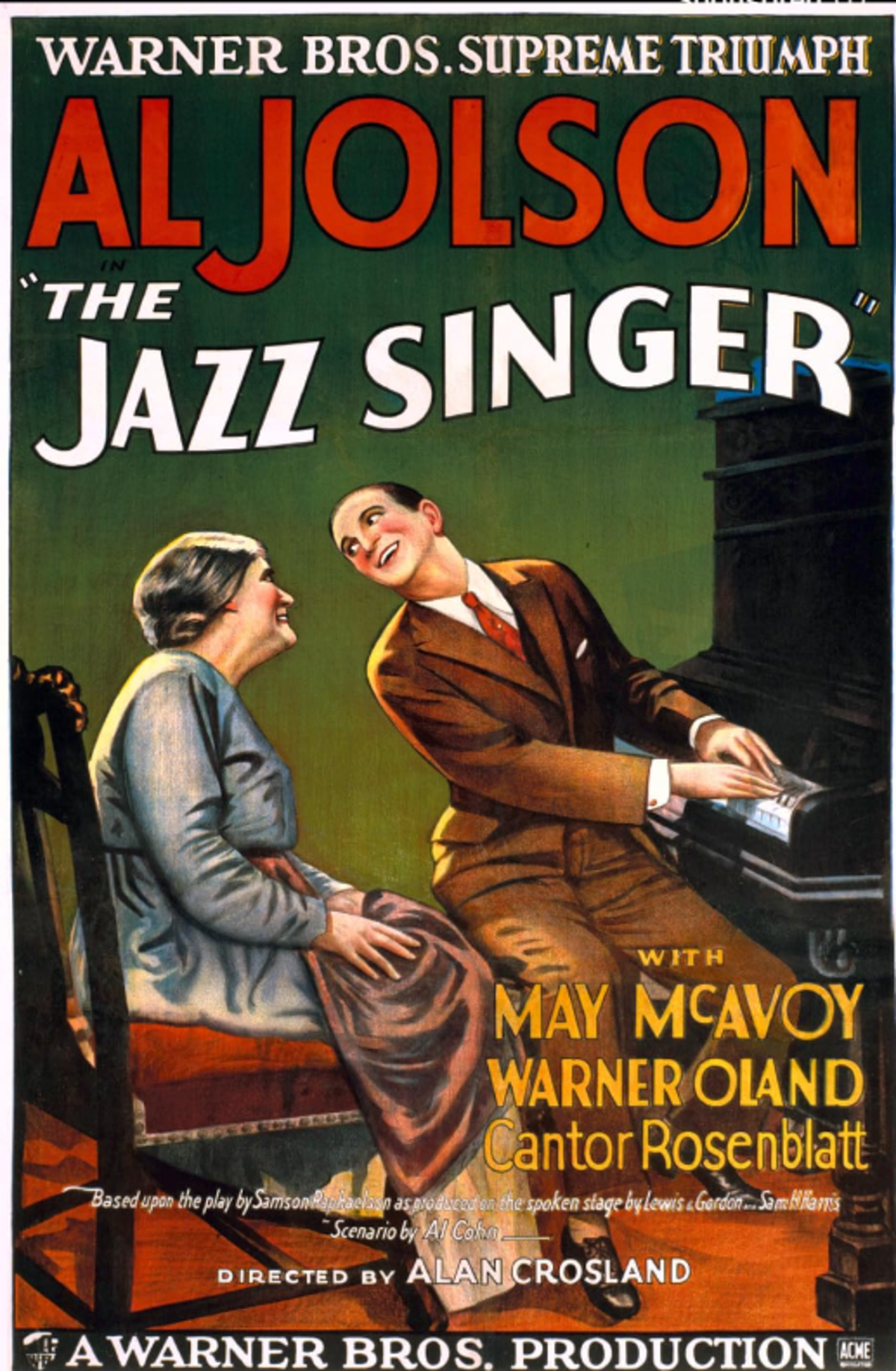
'The Jazz Singer,' which originated from a 1925 Broadway production of the same title, inspired numerous adaptations.
These include a 1952 film with Danny Thomas in the lead role, a 1959 television rendition featuring Jerry Lee Lewis, and a 1980 version starring Neil Diamond.
"Though hardly a cinematic masterpiece — or even a good film, for that matter — the 1927 version of ‘The Jazz Singer’ remains one of the most important motion pictures ever made," states the Alt Film Guide.
It adds, "This part-musical, part-silent, all-mush melodrama marked the first time in a feature film that synchronized sound and voices could be heard in musical numbers and talking segments."
The movie tells the tale of Jakie Rabinowitz, a young man who challenges the customs of his deeply religious Jewish family.
When he sings secular songs in a beer garden, his father, a hazzan (cantor), disciplines him, leading Jakie to leave home.
In subsequent years, adopting the persona of Jack Robin, he emerged as a talented jazz singer, often performing in blackface.
While striving to carve out a successful career as a performer, he found himself grappling with the conflicting demands of his professional ambitions and the familial and cultural obligations that tugged at him.
'The Jazz Singer' and the sound
The movie employed Warner Brothers’ 'Vitaphone' sound system. In essence, the soundtrack was captured on a 16-inch phonograph record and had to be played on a turntable concurrently with the film.
The projectionist was tasked with manually aligning the sound with the visuals. Considering the film’s 89-minute duration spanned across 15 reels, this was no simple feat.
'The Jazz Singer' and the blackface
'The Jazz Singer' holds a notable place in film history due to its pioneering technical achievements. It was the first feature-length film to incorporate lip-synchronous singing, dialogue, and a synchronized music score.
However, it’s also recognized for its use of blackface, a controversial practice where performers darken their skin to mimic people of African descent.
In the film, blackface plays a pivotal role in the film’s narrative. Al Jolson’s lead character spends a significant portion of the film in blackface, which serves as the creative and emotional core of his character’s story.
The film employs blackface imagery to delve into themes of duplicity and the blending of ethnic identities within the American context.
Was 'The Jazz Singer' successful?
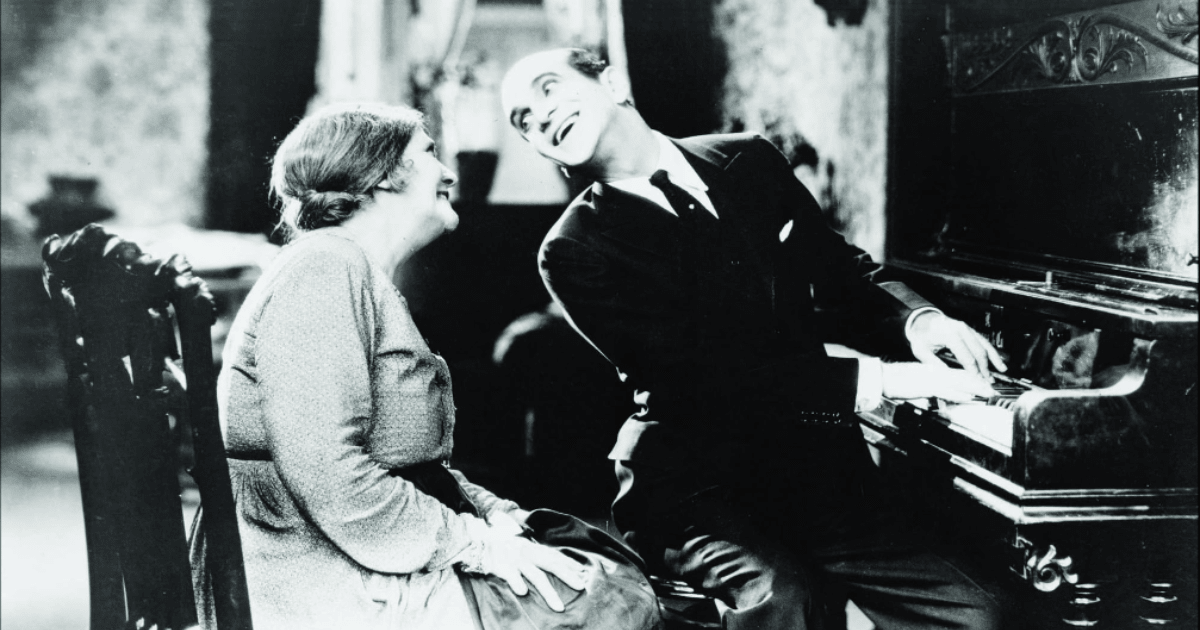
The film has received praise from all generations. However, it has also drawn criticism from contemporary reviewers, particularly for Jolson's extensive usage of blackface.
His aspiring pop performer, Rabinowitz, quits the house after humiliating his religious family and goes on stage dressed as jazz singer Jake Robin.
"Jolson spends a significant portion of ‘Jazz Singer’ in blackface, masquerading as an African-American man — that is, as a grotesque, degrading approximation of one," as per Entertainment Weekly in 2007.
However, 'The Jazz Singer' holds a special place in American artistic history.
The film is included in the National Film Registry’s collection of motion pictures deemed "culturally, historically or aesthetically significant."
Warner Bros. won a special Oscar for the film at the first Academy Awards in 1929. The Academy reportedly named the film "the pioneer outstanding talking picture which has revolutionized the industry."
The American Film Institute reportedly ranks the film as the 90th greatest American movie of all time. Additionally, its opening line — "You ain’t heard nothing yet" — holds the 71st position on AFI’s list of top cinema quotes, as cited by Fox News.