'P-Valley' and Cardi B, Megan Thee Stallion's ‘WAP’ aren't objectifying women as they front their own stories
Women's sexuality has been a long-debated point for feminism. Control over one's own body means different things but often 'feminism' around women's sexuality gets applauded only when they coincide with the male gaze.
One of the biggest examples of this is Hugh Hefner's 'Playboy' empire and Hefner being celebrated as a "feminist icon" when all he was doing was profiting off women's bodies and his 'activism' was a self-serving ploy geared towards the objectification of women's bodies. Since Hefner and the 60s, we've had several iterations of what feminism can or should mean around women's sexuality and consent, ranging from sex positivism, legalization of sex work to how women choose to dress or present their own bodies and sexuality to the world.
Of late, we are seeing a rise in female-fronted depictions of sexuality that are being criticized in the same terms as Hefner's pornography. The question being asked is why these depictions don't 'objectify' or demean women since they also technically cater to the male gaze. From the chart-busting Cardi B and Megan thee stallion collab 'WAP' that crows about a "wet a** p***y", to 'P-Valley' depicting Black Southern female sexuality on the pole and off it to the upcoming 'Teenage Bounty Hunters' that was originally called 'Slutty Teenage Bounty Hunters' -- we have a renaissance of sorts.
The triggers are all there, absolutely. 'WAP' starts with a low drone of 'w***es* in the house' as its background beat. 'P-Valley' often has the strippers in various states of undress when they are entertaining in the private rooms or getting changed in their green room. In the trailer for 'Teenage Bounty Hunters', one of the crime-fighting sisters calls the other the "sluttier twin".
Words like slut, wh**e, or the visuals of naked female bodies as background eye candy wallpaper for shows like 'The Sopranos' has been a part of pop culture forever -- aimed at demeaning women's bodies and sexuality. We also have male rappers go on and on about their privates and their desires (which sometimes involve hurting women) and their raps have been called poetry. Taking about jizz or d***s is so commonplace that no one raises an eyebrow, even when they pop up in conversations between friends.
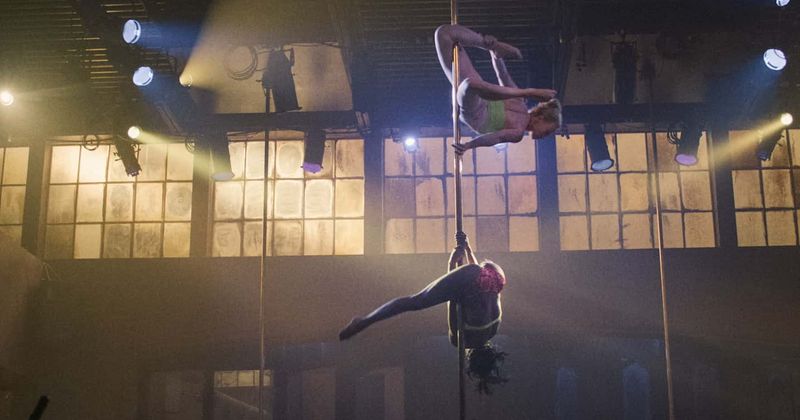
What separates female-fronted depictions of sexuality and sex positivism or activism is their context. In 'P-Valley', the first naked breast you see is of Keyshawn breastfeeding her child and the women aren't the 't**s and a**' wallpaper of the show -- they are the story. Their stripper numbers highlight the effort that goes into them with the music being muted and the audio focussing on their harsh grunts and wheezes and other decidedly 'unfeminine' noises (like the stripper Toy's farts) as they swing from the pole like athletes.
Similarly, for the upcoming 'Teenage Bounty Hunter', showrunner Kathleen Jordan said she wanted the bounty-hunting twins to "live in a world where sexuality for teenage girls could be honest, fun, and full of pleasure", in a way that she wasn't allowed herself in her own conservative Atlanta neighborhood.
And then there is Cardi B and Megan Thee Stallion rapping about their desires and using words to describe their arousal without using euphemistic words usually used when describing "female genitalia" as Ben Shapiro so coyly put it. Female secretions are often seen as disgusting and much effort has been put (over centuries) to make women's nether regions dryer and more sanitary rather than being celebrated in all their 'gushy' glory. Many women have also been told that being 'too wet' doesn't provide enough friction.
So when Cardi B and Megan Thee Stallion are explicitly rapping about women's bodily fluids and female desire they are doing it in the face of a culture that tries to sanitize depictions of female sexuality. Cardi B has also called out the hypocrisy about people having a problem with her hypersexual videos and lyrics. "First of all, I rap about p***y because she my best friend, and second of all it’s because it seems like that’s what people wanna hear,” she said, adding that there were a lot of "female rappers that be rapping they a** off and don’t be talking about they p***y, and don’t be talking about getting down and dirty, and y’all don’t be supporting them and they be mad dope”. Criticizing the double standard, she pointed out that “bloggers don’t support them, they don’t be getting the recognition. So don’t blame that s**t on us when y’all not the ones supporting them.”
Which brings us back to point number one. Mainstream pop culture feminist discourse only seems to revolve around women's bodies and sexuality because it collides with the male gaze. Of course, there are other things to talk about besides subverting the objectifying male gaze -- but unless those 'issues' aren't disguised in the sheen of sex, no one really cares.