
Is anti-Palestinian rhetoric also 'antisemitic'? 19th century origins of term sparks debate as to whether it's accurate

LOS ANGELES, CALIFORNIA: In the vast realm of social media, where every user is granted a voice, discussions on sensitive topics can spark impassioned debates. One such discourse that has recently gained traction revolves around the term "antisemitic" when used in response to pro-Palestine statements.
The crux of the argument lies in the fact that Palestinians are Semitic people, prompting some to contend that even anti-Palestine statements could be labeled as antisemitic. However, the pro-Israel camp vehemently disagrees with this notion.
The Pro-Palestine perspective
"It can't be anti-Semitic to be pro-Palestinian, as they are Semites too," argued one individual on X (formerly Twitter), setting off a cascade of fervent reactions.
It can't be anti-Semitic to be pro Palestinian, as they are Semites too.
— Anne Young (@smyrkyanne) November 21, 2023
Support from the pro-Palestine camp was evident, with one commenter expressing, "Absolutely correct. Some people are simply mad because they are under this illusion that everybody should unconditionally be loyal and blindly support Israel no matter what evil they do or war crimes they commit."
Another commenter highlighted the contentious nature of labeling, stating, "Haven't you learned by now that Zionists and their supporters call everyone who doesn't support them antisemitic? Those like me who are antizionist Jews they accuse of being 'self-hating.' Nothing but deflection."
"Technically yes, you’re correct but in colloquial speech, most people understand antisemitism as anti-Jew," someone else added.
Absolutely correct 💯 Some people are simply mad because they are under this illusion that everybody should unconditionally be loyal and blindly support Israel no matter what evil they do or war crimes they commit. They are far from being an innocent party 😐
— Shiloh 🇯🇲 ✊🏾 (@Shiloh70657703) November 22, 2023
Haven't you learned by now that Zionists and their supporters call everyone who doesn't support them antisemitic. Those like me who are antizionist Jews they accuse of being "self hating". Nothing but deflection.
— 🇵🇸YourFavoriteBarWench🇵🇸 (@YFBarwench) November 22, 2023
Technically yes, you’re correct but in colloquial speech most people understand antisemitism as anti Jew.
— Tamar CPT (@tamar_cpt) November 22, 2023
Opposing voices
However, opposing voices strongly refuted the claim, asserting that the term "antisemitic" was specifically coined to describe hostility towards Jews and only Jews.
"The term was specifically invented to describe Jews, and only Jews," one declared.
"Oh come on. Regardless of the accuracy of the term, it is clearly used to mean anti-Jew," another insisted.
"Take it up with Wilhelm Marr. He popularised the term and it was used only with regard to Jews. You can also tell Hitler that Jews aren't a race when you want to argue that Judaism is only a religion," yet another argued.
The term was specifically invented to describe Jews, and only Jews.
— Rio Spooner (@rio_spooner) November 22, 2023
Oh come on. Regardless of the accuracy of the term, it is clearly used to mean anti-Jew.
— Wyatt Ellis (@MisguidedLiber1) November 22, 2023
Take it up with Wilhelm Marr. He popularised the term and it was used only with regard to Jews. You can also tell Hitler that Jews aren't a race when you want to argue that Judaism is only a religion.
— samantha winch (@samwinch) November 22, 2023
Exploring origins: Semite and antisemitism
To unravel the truth behind this semantic conundrum, it becomes imperative to delve into the origins of the terms 'Semite' and 'Antisemitism.'
According to the Britannica encyclopedia, the term Semite was coined in the 19th century to describe speakers of Semitic languages, encompassing a diverse group including Arabs, Akkadians, Canaanites, Hebrews, and certain Ethiopian and Aramaean tribes.
Despite proposals suggesting Mesopotamia, the western coast of the Mediterranean, the Arabian Peninsula, and the Horn of Africa as potential prehistoric sites for the origins of Semitic-speaking populations, a compelling void persists in the absence of archaeological or scientific evidence supporting the existence of a common Semitic people.
The notion of a shared heritage among Semitic-speaking peoples has waned, primarily due to the lack of common traits beyond language. This absence of tangible evidence has led to the diminishing favorability of the term "Semite" in encompassing the diverse range of Semitic-speaking communities.
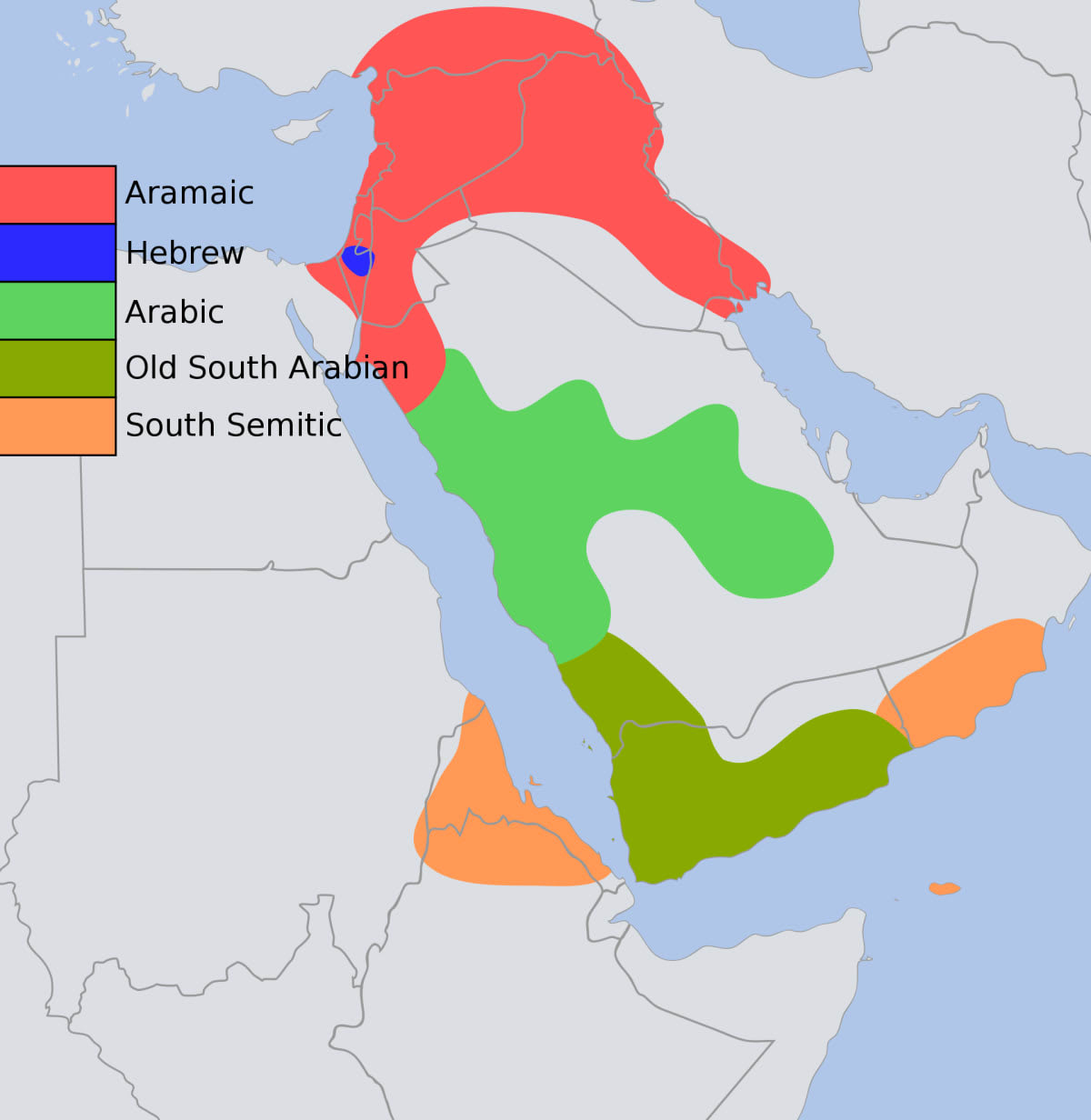
Critics argue for the removal of the hyphen in "anti-Semitism" to dispel pseudoscientific notions of a "Semitic race." Instead, they advocate using "antisemitism" to describe hostility or discrimination against Jews as a religious or racial group.
Historically, Semitic-speaking peoples were dispersed throughout western Asia by 2500 BCE, with influences ranging from Phoenicia to Mesopotamia and Palestine. However, the notion of a common Semitic people lacks archaeological or scientific evidence.
The term "antisemitism" itself was introduced in 1879 by German agitator Wilhelm Marr during the anti-Jewish campaigns in central Europe.
The rise of Nazi antisemitism, culminating in the Holocaust, took on a racist dimension, targeting Jews based on supposed biological characteristics. This form of anti-Jewish racism emerged with the advent of "scientific racism" in the 19th century, distinguishing it from earlier prejudices.
As we navigate the 21st century, the persistence of antisemitism prompts a reevaluation of its definition and strategies to combat this phenomenon, which has adapted to incorporate old tropes and manifest in new forms.


