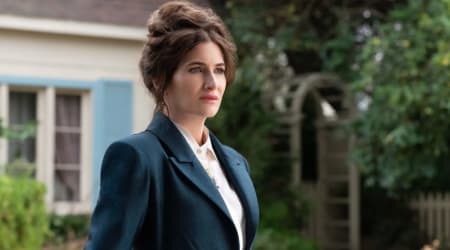
'Devs' vs 'Westworld': While both obsess over lack of free will, HBO's show displays its real-world effects

In the midst of a dystopian battle against a non-sentient virus that threatens to destroy human lives and disrupt global economies, the idea of dystopian horror on television seems tame and ultimately not enough to scare us anymore (which in turn makes us disinterested in it). But two science fiction shows in 2020 have made a rather interesting choice of going in a direction that has been less explored.
Alex Garland’s ‘Devs’, and Jonathan Noland and Lisa Joy’s ‘Westworld’ Season 3 paint the picture of a predictable human world sans free will. In the former, we have a man (Nick Offerman) who believes in the principle of determinism to such a degree that he uses all his resources to develop a system of quantum computing that would help predict human behavior. What he chooses to do with such a technology is unclear so far (the show has reached its midseason mark).
In the latter, a company called Incite has already developed a piece of tech called Rehoboam that has changed how humans function. The system is at the core of how the world is run and it poses a threat to anyone who chooses to exercise free will.
Free will can easily be considered the final bastion for humans under a global capitalist system where there are few forms of ethical consumption. Free will is what keeps people going as they, like the Hosts in ‘Westworld’, keep on repeating their actions in an untiring loop. But even as the two shows demonstrate the inherent dangers of this deterministic system, are there any differences between how they are proposed?
Vincent Cassel’s character in ‘Westworld’, Incite co-founder Serac told Maeve (Thandie Newton) in episode 2, “Our history is like the ravings of a lunatic -- chaos. But we’ve changed that. For the first time history has an author, a system.”
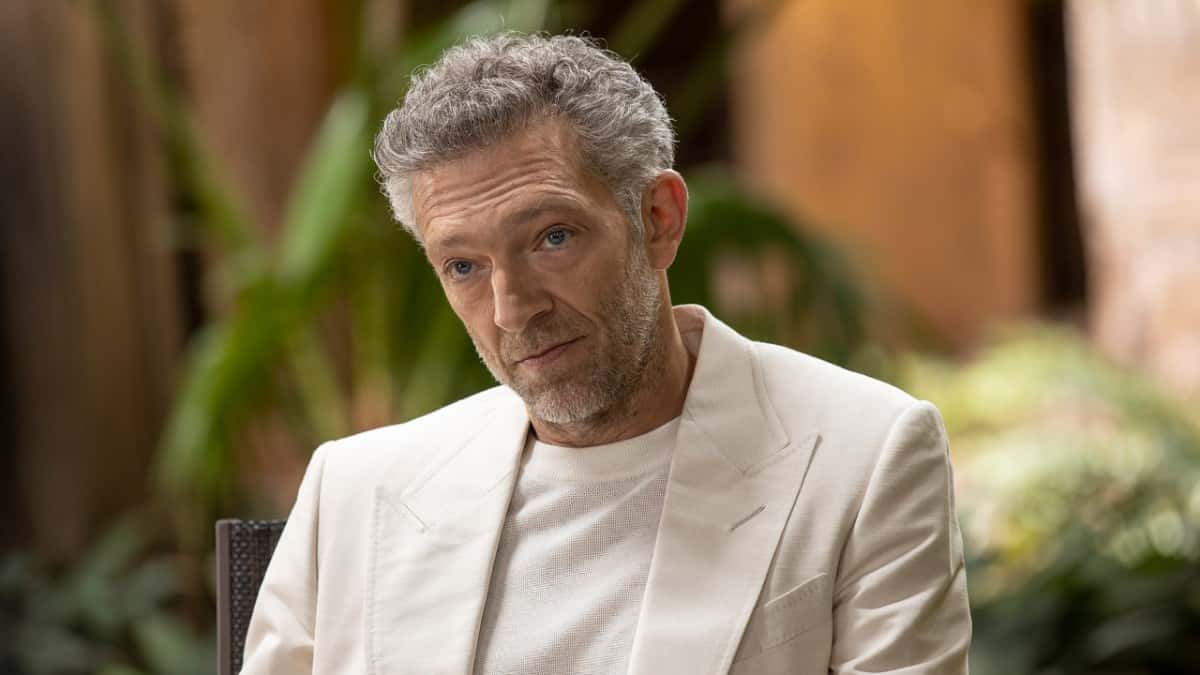
This system has been fed every action of each person on Earth and it uses algorithms to play out the most likely path for each life born into this world. But it doesn't just predict the future, It makes choices for those it calculates will live worthy lives. In short, Rehoboam controls every human life. In the real world of ‘Westworld’, there no longer exists free will, save the unpredictable divergence in the form of Dolores (Evan Rachel Wood). Rehoboam’s self-fulfilling prophecies dictate everything, starting from one’s relationships to one’s career to their deaths.
‘Devs’ too is preoccupied with determinism, and how human behavior can be calculated with code. Garland explained the concept of a deterministic universe at the New York Comic-Con last year: "Where you and I are concerned, the most significant thing in some respects is that we stop having free will. So when you make a decision, you feel, 'OK, I made this decision for my own reasons, because I woke up this morning and felt like having a cup of coffee.' But if you unraveled everything about you, about the specifics, the constructions of your brain, about why you prefer coffee to tea, and you keep going into a not infinite but a near-infinite amount of detail, then five seconds before you say, 'I would like to have a cup of coffee,' one would be able to predict that is exactly what you would do at that moment."
Both shows mull over the anxieties of the lack of free will. In episode 4 of ‘Devs’, we saw Forest (Offerman) wondering if they should have the power they have, even likening it to magic. But that’s where the difference between the two shows lie.

One show battles with the angst of the possibility of a world sans free will (while reminding us that if the principle of causal determinism is to be believed, it is already bereft of that). The other, ‘Westworld’, ups the ante and showcases a world where technology simulates human lives and then decides for them what they should do, stripping them of even the idea of that (but only in practicality, for the humans remain utterly ignorant of such puppeteering). The difference is, as of yet, only of intent. In both shows, the fear of the lack of free will is discernible.
‘Devs’ drops on FX on Hulu, every Thursday at 12 am. The next episode of 'Westworld' airs April 5, on HBO.